Propagators
Propagators help cuttings and seedlings by holding steadier warmth and humidity than open room air usually can. They are useful for early rooting stages, not for mature plants that simply need better care.
Propagators for cuttings, seedlings and other small propagation projects that need steadier humidity and warmth than open room air usually gives. Practical rooting stages, seed starts and compact setups where consistency matters more than scale, especially on cooler windowsills or in drier homes.

About Our Filters
Filters help you narrow things down fast and without guessing. We put a lot of time and effort into keeping filter values consistent across the shop by cross-checking references and validating them against real-world indoor growing and handling.
Use them as guidance, not guarantees. Homes vary a lot, so for the full context (and any exceptions), open the product page and read the description.
How filtering works
- Filters stack: each selection narrows results.
- Multiple picks in one filter are usually either/or within that filter.
- Undo anytime: click a selected option again (or clear filters).
Safety
- Non-toxic: not known for relevant chemical toxicity for common pets (chewing can still cause irritation).
- Non-toxic & Pet Friendly: stricter shortlist that also avoids many physical hazards like spines, sharp tips, thorns, and bristles.
Common care filters
- Light level: Low indirect → Full sun/direct.
- Water Needs: Low / Medium / High.
- Humidity Level: Normal (40–50%) / Moist (50–60%) / Humid (60–80%+).
Growth & size
- Growth Habit: climbing, trailing, crawling, upright, self-heading, clumping, rosette.
- Needs support? none / optional / needed.
- Delivered size: pot size + plant height at shipping.
- Max size indoors: realistic long-term height + spread indoors.
Looks & botanical browsing
- Leaf Shape & Size + Foliage Colour: quick visual categories.
- Plant Type / Genus / Family: browse by broad group or taxonomy.
If you want to see the references we use, Plant Care Resources is simply a curated list of source links (POWO, Kew, and more).
Sort by
Propagators
Quick Overview
Propagators for reliable cuttings and seedlings
- Stability: propagators keep temperature and humidity steadier than open room air, which helps new roots form.
- Light: place domes and trays in bright, indirect light; direct sun on plastic or glass easily overheats tender tissue.
- Moisture: aim for evenly moist substrates, not soaked; constant saturation is a common reason cuttings rot.
- Ventilation: open vents or lift lids regularly to release excess condensation and reduce mould on leaves and media.
- Bottom heat: heat mats under propagators suit warmth-loving species, but only when tops stay cool enough.
- Feeding: most cuttings do not need fertilizer until roots are visible and new growth has started to extend.
Details & Care
Propagators: controlled starts for cuttings and seeds
New cuttings and seedlings are unforgiving. Dry indoor air, cold window sills and random drafts can stall or rot them long before roots form properly and become reliable.
Propagators here give you a small, more controlled pocket where humidity, warmth and airflow are easier to keep steady during the first weeks.
Problems propagators help to avoid
- cuttings drying out faster than they can callus or root,
- cold surfaces that slow or stop new root formation,
- inconsistent conditions from open trays on busy sills or shelves.
Propagator options in this range
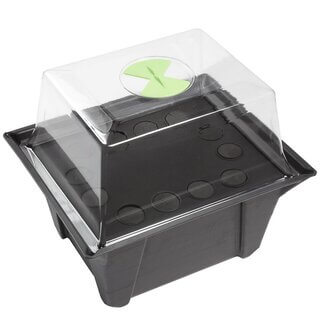
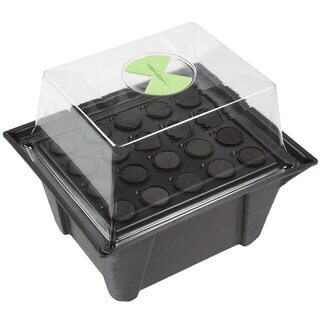
- Trays with clear domes for cuttings and seed sowing in substrate.
- Heat mats for gentle bottom warmth where species prefer it (if available).
- Water propagation stations for cuttings that root cleanly in water before potting up.
Simple use rules
- keep substrate moist, not waterlogged,
- vent domes more as roots and new growth appear,
- delay fertilizer until strong roots and leaves have formed.
Methods, timing and examples for different plant types are outlined in Propagating Houseplants-Comprehensive Guide. From this Propagators section, choose the hardware that keeps more of your cuttings alive instead of leaving them to chance on a cold windowsill.
Frequently Asked Questions About Propagators
What does a propagator actually do?
A propagator creates a warmer, more humid, and more stable environment for seeds or cuttings. That extra stability helps cuttings lose less moisture while rooting and gives seedlings a more even start.
Are propagators only useful for seeds?
No. They are also useful for cuttings, especially when you want to reduce dehydration while roots are forming and keep conditions steadier than normal room air.
Do I still need light if I use a propagator?
Yes. Humidity and warmth do not replace light. Seeds, seedlings, and cuttings still need bright light or a suitable grow light if you want compact, healthy development.
Why do seedlings or cuttings rot in a propagator?
Usually because the setup is too wet, too stale, too dim, or not clean enough. Old media, dirty trays, soggy compost, and trapped air make rot and damping-off much more likely.
Do I need to vent or open a propagator?
Usually yes once seedlings have emerged or cuttings are rooting well. Constantly trapped humidity with no airflow encourages mould, weak growth, and rot.
Limited discounts, extras, and bundle deals for subscribers.
Get points with every order to redeem them for discounts.
Give your friends 10 € off and get 200 Foliage Points.
Use your 10% code on plants when you're ready to order.