
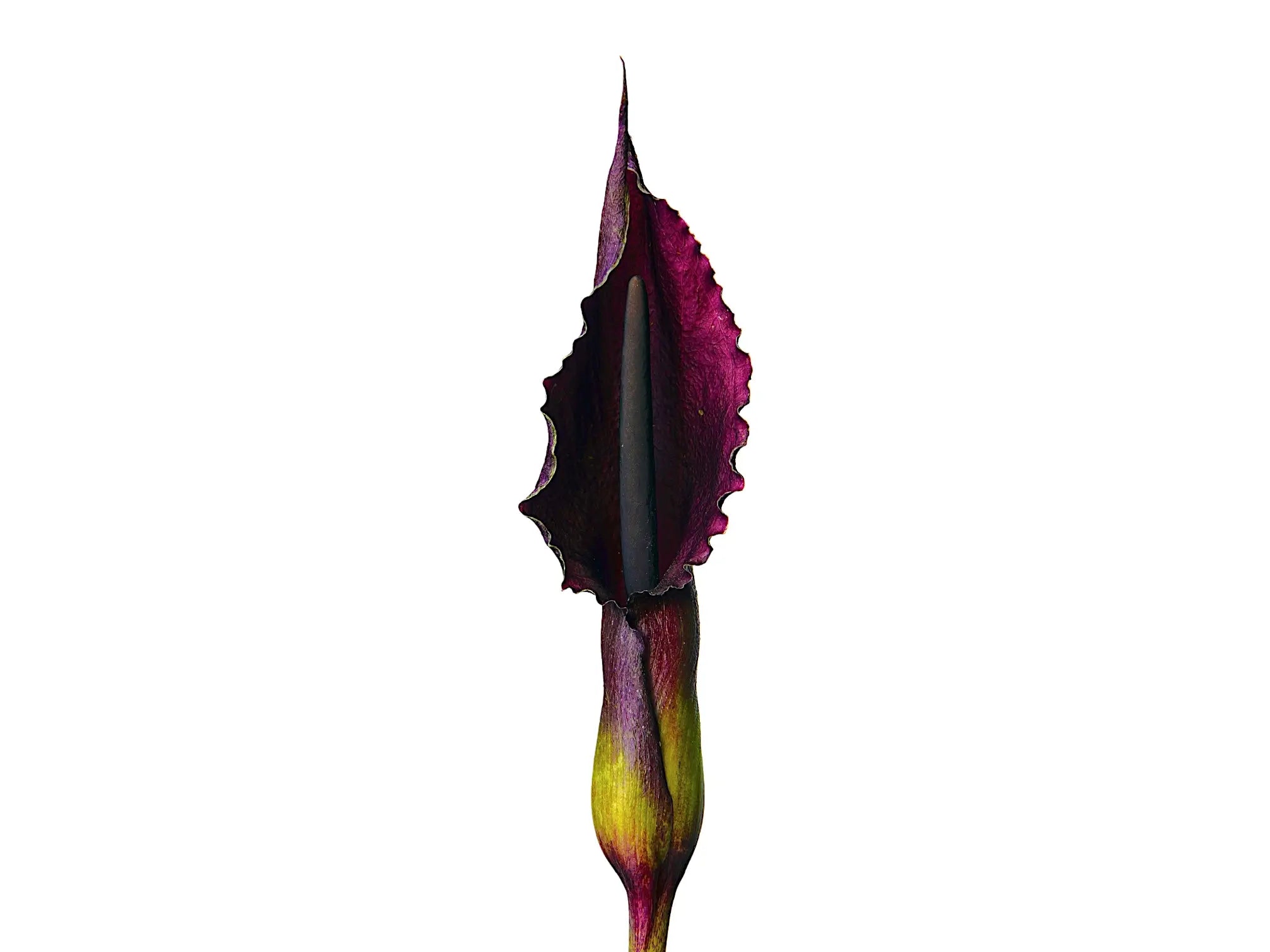
Aroids: The Fabulous Arum Family
Aroids are more than iconic leaves. This deep dive breaks down what defines Araceae, how different aroids grow and reproduce, where they come from, and why some are major food crops. Includes key g...
Read more
Philodendrons have earned their spot as indoor plant royalty — they’re bold, low-maintenance, and endlessly diverse. But few cultivars stir as much excitement among collectors as the Philodendron 'Florida' group. These are not your average houseplants. Each one brings a different twist, from ghostly white leaves to striking variegation and rich bronze tones.
In this post, you’ll get to know four iconic cultivars that all trace back to a legendary hybrid cross: Philodendron 'Florida Green', Philodendron 'Florida Beauty', Philodendron 'Florida Ghost', and Philodendron 'Florida Bronze'. We’ll break down what makes each one special, how to care for them, and why they’re some of the most sought-after plants in the aroid world.

The Philodendron 'Florida' hybrids trace their roots to mid-20th-century Florida, where breeder Robert McColley developed a wide range of aroid cultivars through intentional hybridization. One of his most influential creations was Philodendron × Florida — a vigorous climber that became the genetic base for several now-iconic cultivars, including 'Florida Beauty', 'Florida Ghost', and 'Florida Bronze'.
According to West & Miller (1956), the original hybrid was a cross between Philodendron squamiferum and Philodendron laciniatum. However, under modern taxonomic consensus (as recognized by Kew’s Plants of the World Online and Tropicos), Philodendron laciniatum (Vell.) Engl. is now treated as a synonym of Philodendron pedatum (Hook.) Kunth.
Therefore, the currently accepted parentage is:
Philodendron × Florida = Philodendron squamiferum × Philodendron pedatum

Both parent species are native to tropical South America and share a deeply lobed leaf structure with a strong climbing habit. P. squamiferum contributes the scaly red petioles and crooked stems, while P. pedatum adds deeply segmented foliage with prominent basal lobes.
From this hybrid base, various cultivars emerged:
These hybrids are key examples of modern aroid breeding: combining structural foliage, climbing performance, and genetic stability in forms well-suited to indoor environments.

Philodendron 'Florida Green' is the foundational cultivar of the Florida hybrid family — and a standout houseplant in its own right. Bred in the mid-20th century by renowned hybridizer Robert McColley in Florida, it was introduced as part of a new wave of ornamental aroids with strong climbing habits and bold, lobed foliage.
While it's commonly described today as a hybrid between Philodendron squamiferum and Philodendron pedatum, original documentation tells a slightly different story. According to West & Miller (1956) in the Proceedings of the Florida State Horticultural Society, the true parentage is:
Philodendron 'Florida Green' = Philodendron squamiferum × Philodendron laciniatum
Under modern taxonomy, Philodendron laciniatum (Vell.) Engl. is now treated as a synonym of Philodendron pedatum (Hook.) Kunth, which helps explain the confusion in later sources.
This hybrid unites the most striking features of both parents:
The result is a non-variegated, fast-growing climber with glossy, intricately lobed leaves, a strong vertical growth pattern, and excellent adaptability to indoor environments.
If you’re looking for a low-maintenance aroid with bold form and no patience required, Philodendron 'Florida Green' delivers steady satisfaction — a true workhorse hybrid that brings structure and energy to any space.

Philodendron 'Florida Beauty' is one of the most visually dramatic variegated houseplants — and it fully earns the hype. This cultivar is a chimeric mutation of Philodendron × Florida, originally bred by Robert McColley in the mid-20th century as a hybrid of P. squamiferum × P. pedatum.
While it keeps the deeply lobed leaf structure of its parent, it introduces striking marbled patterns in cream, lime, and soft yellow. Each leaf is genetically unique, making every plant a living mosaic — and a standout in any collection.
The marbled look comes from a chimeric mutation that affects how certain leaf cells produce chlorophyll:
This pattern isn’t stable across every growth point, which is why new leaves often vary dramatically.
Let’s clear this up: light does not create or increase variegation. The pattern is genetically fixed in the plant's chimeric tissue.
That said, light plays a major role in plant health:
Pro tip: If several new leaves emerge solid green, prune back to a node that previously produced variegation. This may help reactivate the variegated sector — if those cell lines are still present.
📌Want to dive deeper into how variegation actually works?
Check out our full guide: Variegated Plants: Myths, Science, and Stunning Foliage — a comprehensive breakdown of plant pigments, care tips, and why light can’t magically trigger variegation.
When grown with bright light, consistent humidity, and gentle care, Philodendron 'Florida Beauty' is more than just a collector’s plant — it’s a statement piece that thrives. With its unpredictable leaf patterning and tropical growth habit, it remains one of the most satisfying variegated aroids to grow long-term.

Few houseplants offer such a dramatic transformation from one leaf to the next as Philodendron 'Florida Ghost'. A cultivar derived from Philodendron × Florida — the hybrid of P. squamiferum and P. pedatum bred by Robert McColley — Florida Ghost stands out not through variegation, but through spectacular developmental color shifts.
New leaves emerge in ethereal tones of bone white, mint green, or soft lime, slowly deepening to medium or dark green over time. Paired with the plant’s deeply lobed foliage and red-tinged, scaly petioles, the result is a sculptural, slow-motion display that’s both surreal and refined.
Unlike variegated plants, Florida Ghost doesn’t carry a chimeric mutation. Its pale coloration is developmental — caused by low chlorophyll levels in newly emerged leaves.
Light doesn’t cause or erase the ghostly tone — but it influences how long the pale phase lasts:
This isn’t reversion — it’s just the plant maturing faster due to environmental cues.
Philodendron 'Florida Ghost' is a cultivar that rewards patience and bright conditions. You don’t need rare pigments or unpredictable variegation to get drama — just time, light, and the joy of watching nature color itself in.

Philodendron 'Florida Bronze' is the earthy, bronze-toned member of the Florida hybrid family — and arguably the most enigmatic. Unlike the better-documented Florida Beauty and Florida Ghost, the exact parentage of this cultivar hasn’t been formally published in academic literature.
That said, based on leaf morphology and pigment behavior, most informed sources suggest that Florida Bronze likely descends from Philodendron 'Black Cardinal' crossed with either Philodendron × Florida or Philodendron bipennifolium. Regardless of its precise lineage, what’s certain is its rich foliage color and distinctive climbing habit.
The warm, coppery flush in young leaves is the result of temporary anthocyanin buildup — a class of pigments also responsible for red, bronze, or purplish tones in many tropical aroids.
As the leaf matures:
This isn’t variegation or a mutation — it’s a normal, color-phase trait similar to what’s seen in cultivars like Philodendron 'Prince of Orange' or Ficus elastica 'Ruby'.
Philodendron 'Florida Bronze' is the perfect choice for collectors who lean toward moody tones and layered textures. It brings the same bold architecture as its relatives, but with an understated warmth that adds depth and contrast to any plant display.
If Florida Ghost is ethereal and Florida Beauty is high-contrast, then Florida Bronze is the grounded, glowing middle path — quietly elegant, quietly wild.
Although each cultivar has its own character — from creamy marbling to ghostly fades — the core care needs for these four climbing hybrids are similar. Use this all-in-one guide to keep your Philodendron 'Florida Green', 'Florida Beauty', 'Florida Ghost' and 'Florida Bronze' thriving indoors.
These hybrids prefer bright, indirect light for strong growth and vibrant color. Morning or filtered afternoon light works well.
📌 Not sure what “bright, indirect light” really means? You're not alone. We broke it down clearly in this guide: So how much light is “plenty of bright, indirect light” EXACTLY? — learn how to spot ideal conditions, what too much or too little light looks like, and how to adjust your plant’s position for healthy growth.
Let the top 2–3 cm of soil dry out before watering. Water thoroughly, then let excess drain.
Florida Beauty & Ghost: More prone to rot due to slower growth and reduced photosynthetic efficiency.
Too much water leads to yellowing leaves and root rot. Too little and you’ll see crispy edges.
📌 Not sure when or how much to water? We've got you covered. The Ultimate Guide to Watering Houseplants — everything you need to know about soil moisture, timing, drainage, and avoiding root rot.
These tropical climbers appreciate 60–80% humidity. They'll tolerate 50% if airflow and light are good.
📌Struggling with dry air or curling leaves? Learn how to dial in the right conditions in our guide:
Mastering Humidity for Healthier Houseplants — from simple tools to pro tips, we cover everything you need to keep humidity-loving plants happy indoors.
Ideal range: 18–29°C. Keep away from heaters, air conditioners, or drafts. Don’t let temperatures fall below 15°C.
Mix your own chunky aroid blend:
Avoid compact or peat-heavy mixes that retain too much moisture.
📌 Not into mixing your own? Grab our ready-to-use Premium Aroid Mix — perfectly balanced for philodendrons, anthuriums, and other chunky-rooted aroids.
📌Not sure what, when, or how to feed your plants? The Ultimate Guide to Fertilizing Houseplants covers everything from soil nutrition to semi-hydroponics — so your plants get exactly what they need, without the guesswork.
Tip: For Florida Beauty, use a cutting with visible variegation to maintain the trait.
Cuttings root easily in water or soil. High humidity and warmth speed things up.
Symptom |
Cause |
Solution |
|---|---|---|
Brown edges |
Dry air or salt buildup |
Increase humidity, flush soil |
Pale leaves on Ghost turn green fast |
Normal development |
Increase light for slower fade |
All-green Beauty leaves |
Random genetic expression |
Prune to a variegated node |
Yellowing lower leaves |
Overwatering or age |
Adjust watering, remove old growth |
Slow growth |
Low temps or low light |
Move to brighter, warmer spot |
All Florida hybrids are toxic if ingested. Keep away from pets and kids. They contain calcium oxalates, which can cause oral and digestive irritation.
Feature |
Florida Green |
Florida Beauty |
Florida Ghost |
Florida Bronze |
|---|---|---|---|---|
Growth speed |
Fast |
Moderate |
Slow–Moderate |
Moderate |
Variegation |
None |
Cream/yellow |
Pale-to-green fade |
Bronze flush |
Care difficulty |
Low |
Medium |
Medium |
Low–Medium |
Light needs |
Medium |
High |
High |
Medium |
Visual impact |
Sculptural |
Marbled |
Ethereal |
Moody & warm |
By understanding each plant’s unique quirks and giving them the right conditions, your Florida hybrids will thrive as the living sculptures they are.
Want to go deeper? Check out the full profiles for each cultivar:
Quick answers for Florida Green, Florida Beauty, Florida Ghost, and related “Florida” lookalikes — written for real-world growing, not hype.
That’s normal. Florida Ghost leaves emerge very pale because chlorophyll hasn’t fully developed yet. As the leaf hardens, chlorophyll builds up and the leaf shifts toward green.
Brighter indirect light can help keep the “ghost” phase looking cleaner and slower to darken, but it won’t stop the colour change entirely — maturity always brings more chlorophyll.
You can’t prevent reversion completely — it’s tied to chimeric genetics. What you can do is push the odds in your favour:
If the active growing point shifts toward green tissue, new leaves will trend greener until you cut back to a better point (if that variegated cell line is still present there).
Not in the classic sense. Florida Ghost doesn’t carry stable chimeric variegation like Florida Beauty. The pale new leaves come from delayed chlorophyll development, not permanent pigment-cell mutation. Mature leaves naturally deepen toward green.
Yes — or at least some kind of vertical support. All core Florida cultivars are scandent climbers. Support helps them build thicker stems, shorten internodes, and produce larger, more mature leaves.
Moss poles, coir poles, or sturdy stakes all work. Without support, plants tend to stretch and stay in smaller-leaf mode.
Every 2–3 years is typical. Repot sooner if roots are circling tightly, pushing out of drainage holes, or if the mix has broken down and stays wet too long.
Move up one pot size at a time and use a chunky aroid mix to keep airflow high and compaction low.
Yes. Like all Philodendron, Florida hybrids contain insoluble calcium oxalates and are toxic if chewed or swallowed. Keep out of reach of pets and small children.
Common symptoms can include mouth irritation, drooling, and digestive upset.
There’s no formally recognised cultivar called Florida Mint. “Florida Mint” is usually a marketing label used for Florida Ghost plants with especially pale, cool-toned juvenile leaves.
In practice: treat “Florida Mint” as Florida Ghost and judge the plant by its actual growth and leaf development, not the tag.
No — but they’re closely related. Philodendron × Florida refers to the original hybrid line. Florida Green is a selected cultivar from that hybrid, grown for vigorous, non-variegated performance and glossy lobed leaves.
So Florida Green descends from × Florida, but it’s a specific clone/selection rather than a name for every plant from that cross.
Not true variegation. Florida Ghost shows temporary pale colour in new leaves because chlorophyll develops later as the leaf matures. It’s a normal developmental phase, not permanent, genetic variegation.
Florida Beauty is chimeric, so variegation depends on which tissue sectors are active in the growing tip. If the meristem shifts toward greener tissue, new leaves can come in mostly green.
This isn’t the plant “deciding” to revert — it’s cell-line dominance. Pruning back to a node that previously produced strong variegation can sometimes bring pattern back, but only if that variegated cell line is still active there.
Philodendron × Florida was created by breeder Robert McColley in Florida. Historical breeding records list the parentage as:
Philodendron × Florida = Philodendron squamiferum × Philodendron laciniatum
Modern confusion happens because Philodendron laciniatum is now widely treated as a synonym of Philodendron pedatum, so later sources often swap the name. The original cross was recorded under the laciniatum name.
This foundational hybrid led to several well-known Florida selections:

Each Philodendron Florida cultivar brings something unique to the table:
If you're just starting out, Florida Green is forgiving and fast-growing. For collectors, Florida Beauty and Florida Ghost offer high visual payoff — just give them the light and humidity they deserve. Want something moodier? Florida Bronze adds warm-toned foliage with the same easy-care charm.
Ready to grow your collection? Browse our curated range of Florida hybrids in the shop — rooted, thriving, and ready to climb.
West, E., & Miller, H. N. (1956). Some notes on Philodendron hybrids. Proceedings of the Florida State Horticultural Society, 69, 343–346.
https://journals.flvc.org/fshs/article/download/101602/97546
→ The original published record documenting several early Philodendron hybrids, including the parentage of Philodendron × Florida (P. squamiferum × P. laciniatum), credited to Robert McColley.
Armarego-Marriott, T., Sandoval-Ibañez, O., & Kowalewska, Ł. (2019). Beyond the darkness: recent lessons from etiolation and de-etiolation studies. Journal of Experimental Botany, 71(4), 1215–1225.
https://doi.org/10.1093/jxb/erz496
→ A review of recent research on how plants transition from dark (etiolated) conditions to light exposure, focusing on chloroplast development and light response — key to understanding pigment shifts in emerging leaves.
Zhang, J.-H., Zeng, J.-C., Wang, X.-M., Chen, S.-F., Albach, D. C., & Li, H.-Q. (2020). A revised classification of leaf variegation types. Flora, 272, 151703.
https://doi.org/10.1016/j.flora.2020.151703
→ Provides a scientifically grounded classification system for leaf variegation, distinguishing between structural, pigment-based, and chimera-driven types with botanical examples.
Sullivan, C. N., & Koski, M. H. (2025). The role of photosynthetic response to environmental
variation in shaping an elevational cline in leaf variegation. Environmental and Experimental Botany, 231, 106100.
https://doi.org/10.1016/j.envexpbot.2025.106100
→ Investigates how variegated leaf areas respond to light and elevation-related stress, providing insight into environmental influences on variegation visibility and photosynthetic efficiency.
Assessment of Genetic Relationships Among Philodendron Cultivars Using AFLP Markers. Journal of the American Society for Horticultural Science, 129(5), 690–697.
https://journals.ashs.org/jashs/view/journals/jashs/129/5/article-p690.xml
→ Analyzes the genetic diversity of Philodendron cultivars using molecular markers — foundational for understanding cultivar identity and potential hybrid lineage.
Johnson. Owner Bob McColley with plants – Orlando, Florida. July 1958. State Archives of Florida, Florida Memory. Accessed 5 May 2025.
https://www.floridamemory.com/items/show/57395
→ Historical photograph of plant breeder Robert McColley, credited with creating Philodendron × Florida and other hybrids at Bamboo Nursery, Orlando.
Aroids: The Fabulous Arum Family
Aroids are more than iconic leaves. This deep dive breaks down what defines Araceae, how different aroids grow and reproduce, where they come from, and why some are major food crops. Includes key g...
Read more
Pretty in Pink: Stunning Pink Foliage Plants and Everything about Pink Variegation
Pink foliage isn’t just aesthetics — variegation patterns and anthocyanin pigments have real biology behind them. Learn how plants get pink, what makes variegation stable or unstable, which pink ho...
Read more